HAU AVIATION INSTITUTE
HISTORY
The Holy Angel University Aviation Institute (HAU-AVI) was established as a bold and transformative initiative of Holy Angel University to respond to the growing demand for highly competent aviation professionals in the Philippines and the global aviation industry. Guided by the University's commitment to academic excellence, innovation, and industry relevance, the Institute was envisioned to become a center for aviation education, producing graduates equipped with the knowledge, technical competence, and professional values required by the ever-evolving aviation sector.
The establishment of the HAU-AVI was driven by PRESIDENT VALDES’ vision of creating an aviation training institution that bridges academic excellence with the evolving demands of the local and global aviation industry. Together with the Institute for Academic Innovation and Entrepreneurship (IAIE) which serves as the implementing arm of the university for new program development, the HAU-AVI was formally established in April 2025. Headed by an Accountable Manager, Engr. Nebuchadnezzar Tiglao, HAU-AVI has journeyed to secure its Approved Training Organization (ATO) Certificate from the Civil Aviation Authority of the Philippines (CAAP) with Aircraft Maintenance Technology (AMT) as its first flagship program.
HAU-AVI is committed to producing competent, ethical, and industry-ready aircraft maintenance professionals capable of meeting the demands of the Philippine and global aviation industry. In its commitment to offer quality program, the university invested in specialized aviation facilities, modern training technologies, and strategic industry partnerships, laying the foundation for HAU-AVI's vision to emerge as a premier aviation training institution.
Recognizing that world-class aviation education is built upon strong collaboration between academia and industry, the HAU-AVI established its first strategic international partnership with ADF Engineering, a leading Turkish manufacturer of aviation and engineering educational training systems. Founded in 2015 and headquartered in Istanbul, Türkiye, ADF Engineering specializes in the design, manufacture, and installation of advanced aviation training equipment and laboratory solutions. ADF's aircraft trainers have been commended by EASA for their effectiveness in delivering practical aviation maintenance training, particularly in replicating the operational environment of modern commercial aircraft.
Through this partnership, HAU-AVI procured state-of-the-art ADF training equipment designed to replicate the systems, controls, and operational environment of commercial aircraft, including aircraft commonly found in airline fleets such as the Airbus A320 and Boeing 777. These advanced trainers feature realistic cockpit displays, aircraft system monitoring interfaces, instructor-controlled fault simulation, and troubleshooting capabilities, enabling students to develop practical competencies in diagnosing and resolving aircraft system malfunctions before working on actual aircraft.
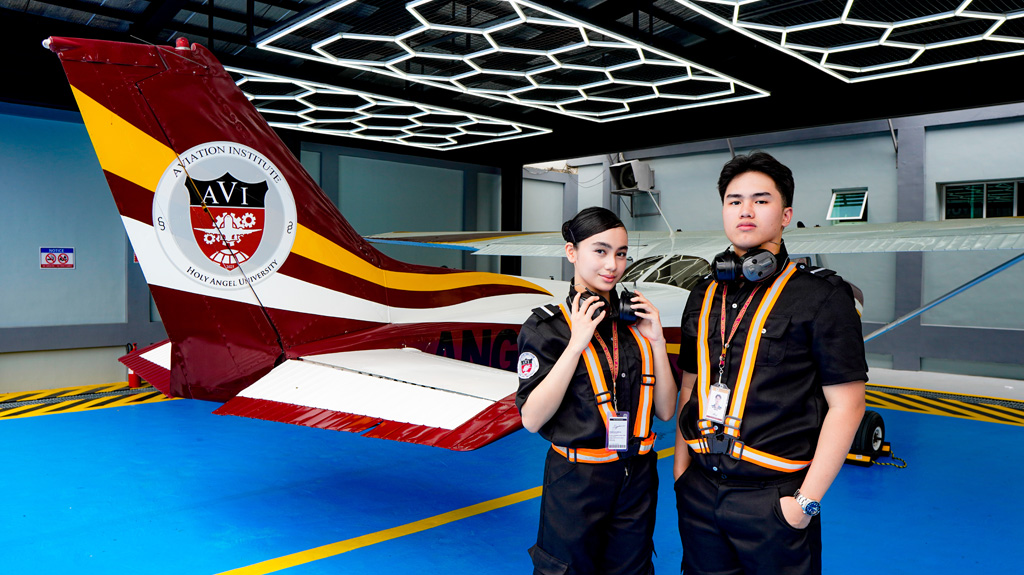
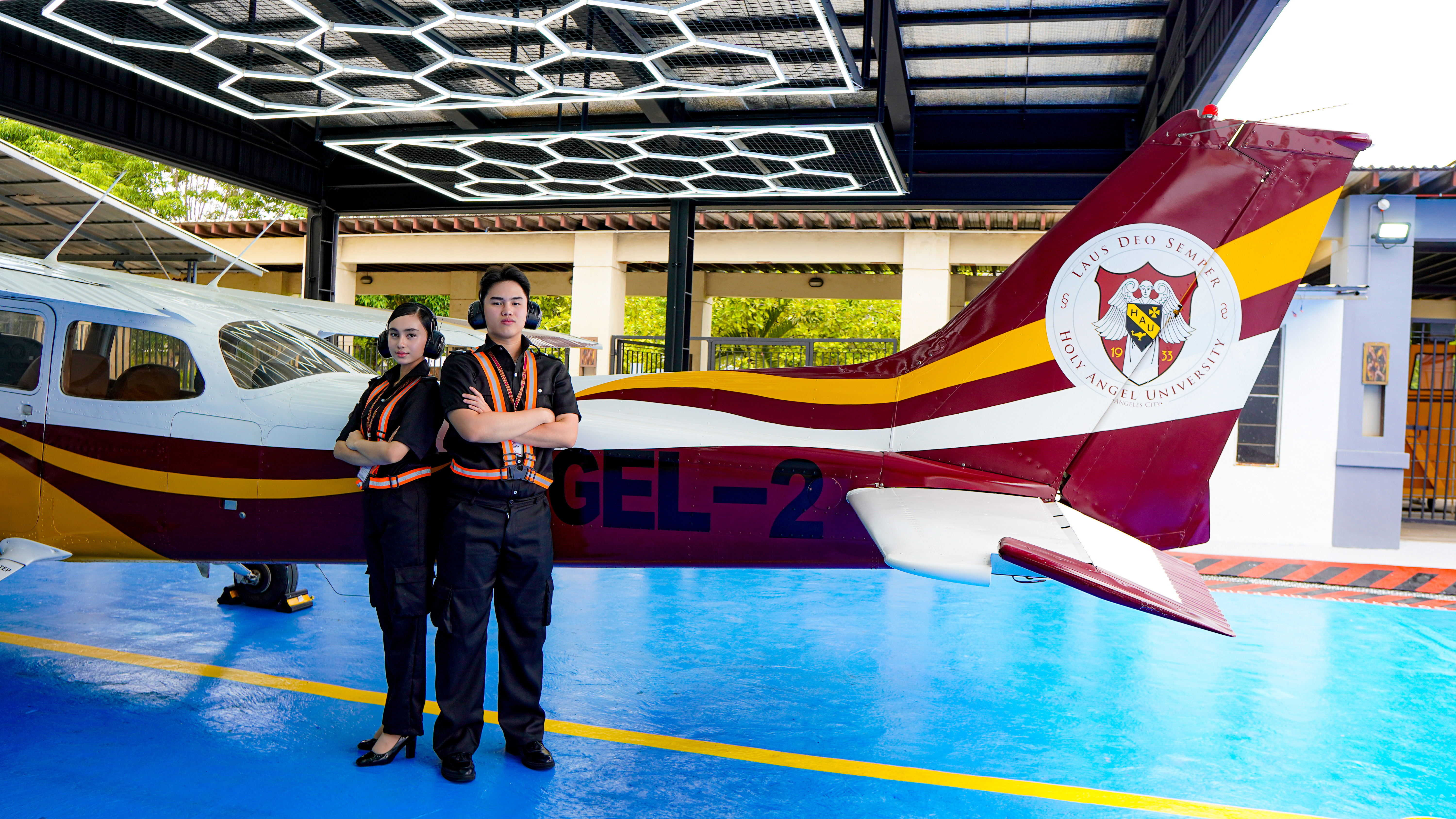
Complementing these advanced simulation systems, HAU-AVI acquired its first operational training aircraft, the Cessna 172N, marking another historic milestone in the Institute's development. Unlike static display aircraft, the Cessna 172N is a fully operational aircraft, allowing students to gain authentic hands-on experience in aircraft inspection, servicing, maintenance procedures, functional testing, and operational checks under the supervision of qualified instructors. Housed within the Institute's dedicated aircraft maintenance hangar, the aircraft provides students with invaluable exposure to real-world maintenance practices and industry-standard operational procedures.
As part of its commitment to producing industry-ready aviation professionals, HAU-AVI also invested in a dedicated aircraft maintenance hangar and modern laboratory facilities, creating an immersive learning environment that bridges classroom instruction with practical application. Supported by industry-experienced instructors, advanced simulation technology, and operational aircraft, the Institute offers students a learning experience that closely reflects the realities of airline and maintenance organization operations.
The Institute's pioneering academic offering is the Diploma in Aircraft Maintenance Technology, a program carefully designed to provide students with comprehensive theoretical instruction and extensive practical training in aircraft maintenance. The curriculum integrates classroom learning, advanced wide body aircraft simulation systems, laboratory exercises, and live aircraft maintenance activities, ensuring graduates develop the technical competence, critical thinking, and professional discipline demanded by the aviation industry.
Guided by its commitment for innovation, inspired by its Catholic identity, and strengthened through strategic industry partnerships, HAU-AVI remains committed to delivering accessible, quality, and competency-based aviation education that cultivates transformative learning, promotes research and innovation, and prepares aviation professionals of conscience, competence, and compassion who are equipped to excel in the global aviation industry and contribute meaningfully to society.
VISION
To be a center for aviation and aeronautical education and research, recognized internationally for innovative, accessible, and values-driven programs rooted in Catholic tradition shaping future aviation professionals committed to excellence and service to society.
MISSION
To offer accessible, quality aviation and aeronautical education that forms students into professionals of conscience, competence, and compassion. We are committed to cultivating transformative learning, pioneering research, and preparing graduates for impactful careers in the global aviation industry.
QUALITY POLICY
HAU-AVI is dedicated to providing quality, safety-oriented, and regulation-compliant training for future aviation professionals. Endorsed by the management, this Quality Policy underscores our unwavering commitment to full compliance with regulatory requirements, relevant legal mandates, and institutional standards.
Guided by our Catholic identity and mission of holistic education, we uphold excellence, integrity, and continual improvement. Our training adheres to regulatory standards, fosters a strong safety culture, and aligns with evolving aviation industry needs. Qualified instructors ensure competency-based learning. Our Quality System is regularly reviewed and disseminated to all stakeholders to maintain relevance and effectiveness.
OBJECTIVES
The Holy Angel University Aviation Institute (HAU-AVI) is committed to achieving the following objectives:
- To provide quality, accessible, and outcomes-based aviation education that prepares learners with the knowledge, skills, and professional values necessary for successful careers across the aviation industry.
- To develop and continuously enhance aviation education pathways that support lifelong learning, professional advancement, and career progression from foundational education to higher education and specialized training.
- To foster innovation and excellence in aviation education through outcome-based instruction, experiential learning, research, and the integration of emerging technologies and industry best practices.
- To strengthen collaboration with industry, government, academic institutions, and international partners in promoting academic excellence, workforce development, and responsiveness to the evolving needs of the aviation sector.
- To cultivate globally competent, ethical, and service-oriented aviation professionals who demonstrate leadership, safety consciousness, environmental stewardship, and a commitment to continuous improvement and lifelong learning.
PROGRAM EDUCATIONAL OBJECTIVES (PEOs)
- Professional Competence and Knowledge Application
Certificate holders will apply general principles and theoretical concepts to solve real-world problems, as evidenced by:
- The ability to explain theoretical concepts without practical application.
- The independent application of knowledge in practical settings.
- Performing complex tasks with accuracy in real-world simulations.
- Critical Thinking and Problem-Solving
Graduates will demonstrate strong critical thinking and problem-solving abilities, as evidenced by:
- Active participation in critical discussions and problem-solving during lectures, demonstrations, and group discussions.
- Engaging in foundational problem-solving abilities when applying general principles to practical scenarios.
- Proficiency in decision-making and hands-on activities through extensive practical application.
- Hands-on Skills and Practical Application
Graduates will develop the necessary manipulative skills and practical experience, as evidenced by:
- Performing essential operations under supervision and applying manipulative skills.
- Completing assigned tasks using knowledge gained from lectures, demonstrations, discussions, and limited hands-on practice.
- Mastery of general principles through independent application of knowledge.
- Effective Communication and Lifelong Learning
Graduates will engage in effective communication and demonstrate a commitment to lifelong learning, as evidenced by:
- Engaging in lectures, demonstrations, and group discussions to articulate and communicate complex ideas.
- Continually applying knowledge gained from varied educational experiences to new, complex scenarios.
- A commitment to continuous improvement, adapting to new challenges in both academic and professional settings.
Program Outcomes (PO)
After finishing the program students will be able to:
- Acquire and articulate a comprehensive understanding of general principles related to the subject matter.
- Develop the ability to explain theoretical concepts without practical application.
- Engage in critical discussions, demonstrating knowledge through participation in lectures, demonstrations, and group discussions.
- Apply general principles to limited practical scenarios, demonstrating foundational problem-solving abilities.
- Develop basic manipulative skills to perform essential operations under supervision.
- Utilize knowledge gained from lectures, demonstrations, discussions, and limited hands-on practice to complete assigned tasks.
- Demonstrate mastery of general principles through the independent application of knowledge in practical settings.
- Perform complex tasks with a high degree of accuracy, simulating real-world scenarios and return-to-service procedures.
- Exhibit proficiency in problem-solving, decision-making, and hands-on activities through comprehensive lectures, demonstrations, discussions, and extensive practical application.
Program Offerings
Undergraduate
Administration and Staff
HAU AVI FACILITIES
AMT Enrollment Guide
ENROLLMENT PERIOD: October 5 to 27, 2026
START OF CLASSES: November 3, 2026
1
SUBMISSION OF REQUIREMENTS AND ISSUANCE OF PERMIT TO ENROLL
Complete the online application form and provide the required personal information.
Admissions Office (1st Floor, St. Martha Building)
| Applicant Type | Required Documents |
|---|---|
| Incoming College Freshmen For Non-HAU Students |
|
| Incoming College Freshmen For HAU Students |
|
| College Transferees |
|
| Applicants from Foreign Schools |
|
2
PAYMENT OF ENTRANCE FEE (present Permit to Enroll upon payment)
Teller’s Office (1st Floor, DJDN Building)
3
ENCODING OF SUBJECTS AND PRINTING OF REGISTRATION FORM (present tuition fee receipt and submit Permit to Enroll)
HAU-AVI Office (MGN 101)
4
ID CAPTURING AND PRINTING (present tuition fee receipt and Registration Form)
ITSS Office (1st Floor, DJDN Building)